


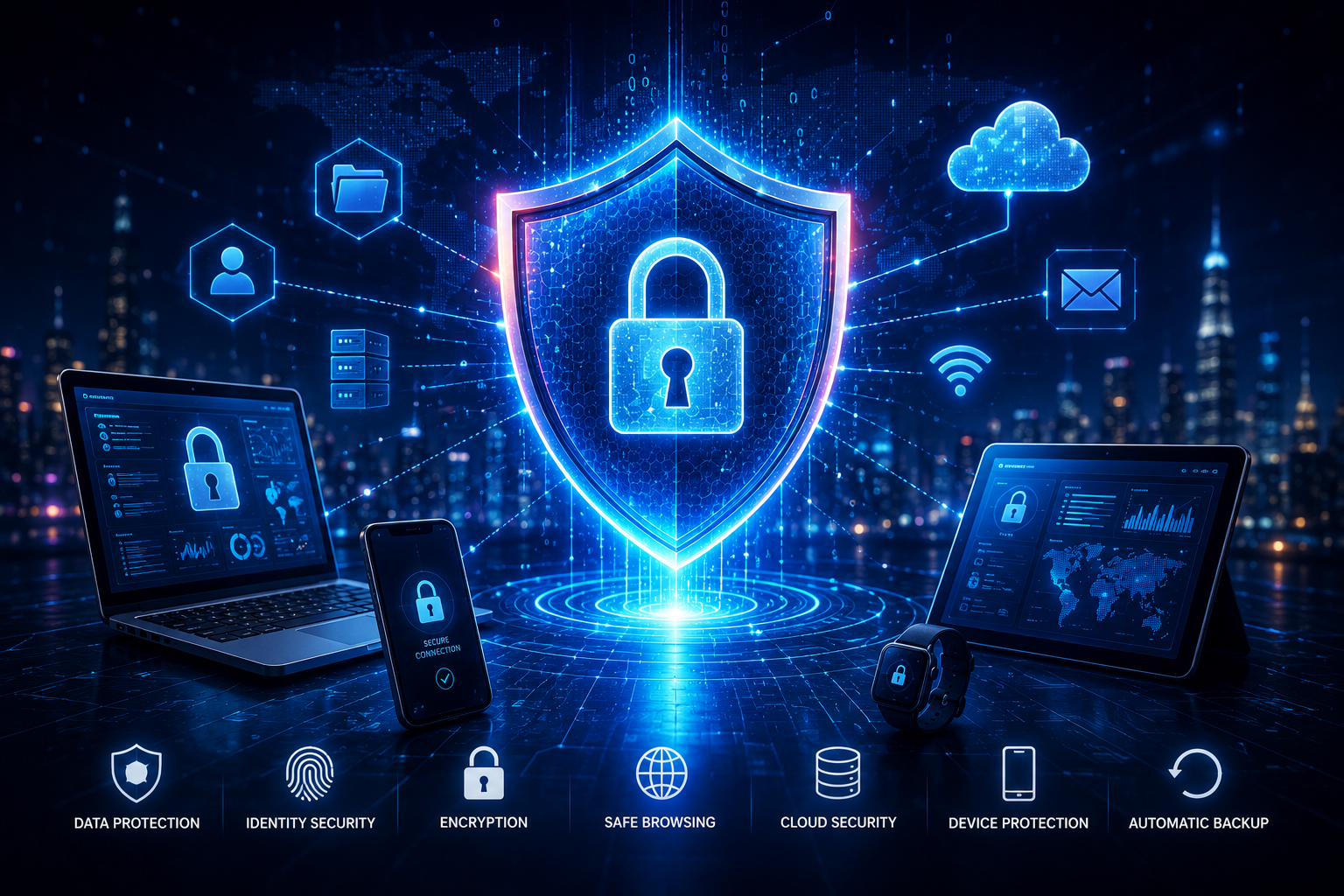


Every time you browse the internet, check your email, shop online, or log into social media, you’re sharing information across countless digital systems. While these services make life easier, they also create opportunities for cybercriminals looking to steal personal data, spread malware, or compromise accounts.
Cybersecurity is the practice of protecting devices, networks, applications, and sensitive information from these digital threats. Once considered a concern only for large corporations, cybersecurity has become equally important for individuals, small businesses, and anyone who spends time online.
In this guide, we’ll explain cybersecurity in simple terms, explore the most common cyber threats, and share practical ways to stay protected in 2026.
What Is Cybersecurity?
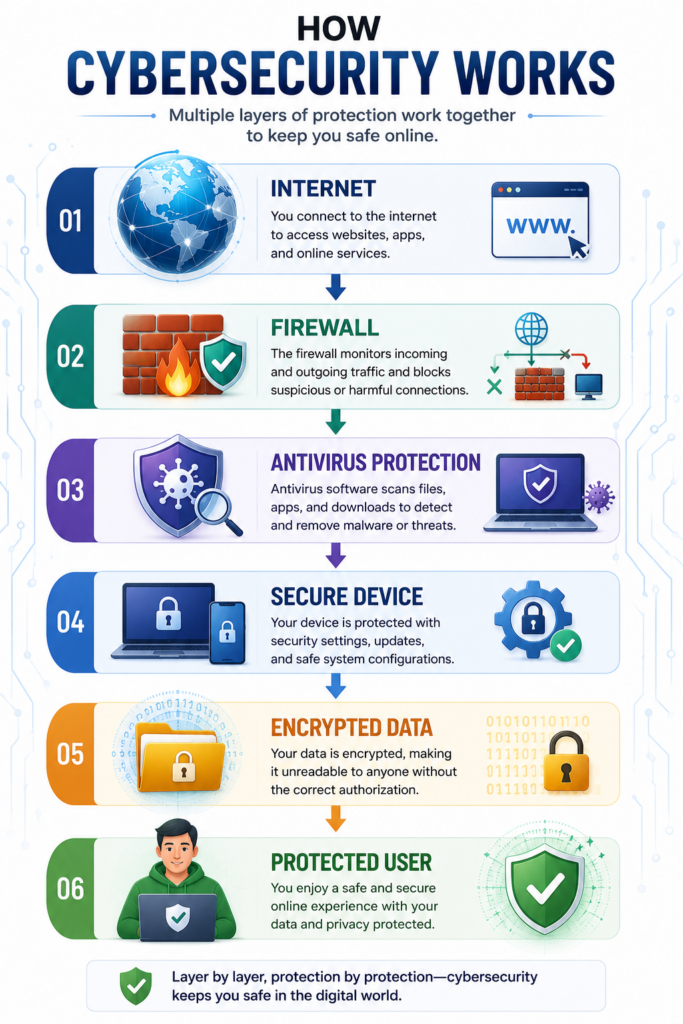
Cybersecurity is the collection of technologies, practices, and policies designed to protect digital systems from unauthorized access, cyberattacks, and data theft. Its purpose is to ensure that information remains confidential, accurate, and available only to authorized users.
Think of cybersecurity as the security system for your digital life. Just as locks and alarms protect your home, cybersecurity protects your devices, online accounts, and personal information from criminals operating on the internet.
Today, cybersecurity safeguards everything from smartphones and laptops to cloud services, online banking, healthcare systems, and even connected vehicles.
Why Cybersecurity Matters
The digital world has become an essential part of everyday life. Banking, education, entertainment, healthcare, shopping, and communication all rely on internet-connected services. As these technologies continue to grow, so do the opportunities for cybercriminals. A successful cyberattack can result in stolen passwords, financial loss, identity theft, leaked personal information, or business disruption. Even a simple phishing email can compromise sensitive accounts if users are not careful.
More Read





Cybersecurity reduces these risks by helping users recognize threats before they cause damage.
GizmoAlert Insight
Cybersecurity isn’t only about stopping hackers. It’s about building habits that protect your digital identity every day.
Common Cyber Threats
Most cyberattacks fall into a handful of well-known categories. Understanding how each works is the first step toward avoiding them.
| Threat | Description | Common Example |
|---|---|---|
| Malware | Malicious software designed to damage or steal data | Virus, Trojan, Spyware |
| Ransomware | Encrypts files and demands payment | LockBit, WannaCry |
| Phishing | Tricks users into revealing passwords | Fake emails |
| Identity Theft | Steals personal information | Banking fraud |
| Password Attacks | Attempts to guess or steal passwords | Brute force |
Although each threat behaves differently, they all share one goal: gaining unauthorized access to your information.
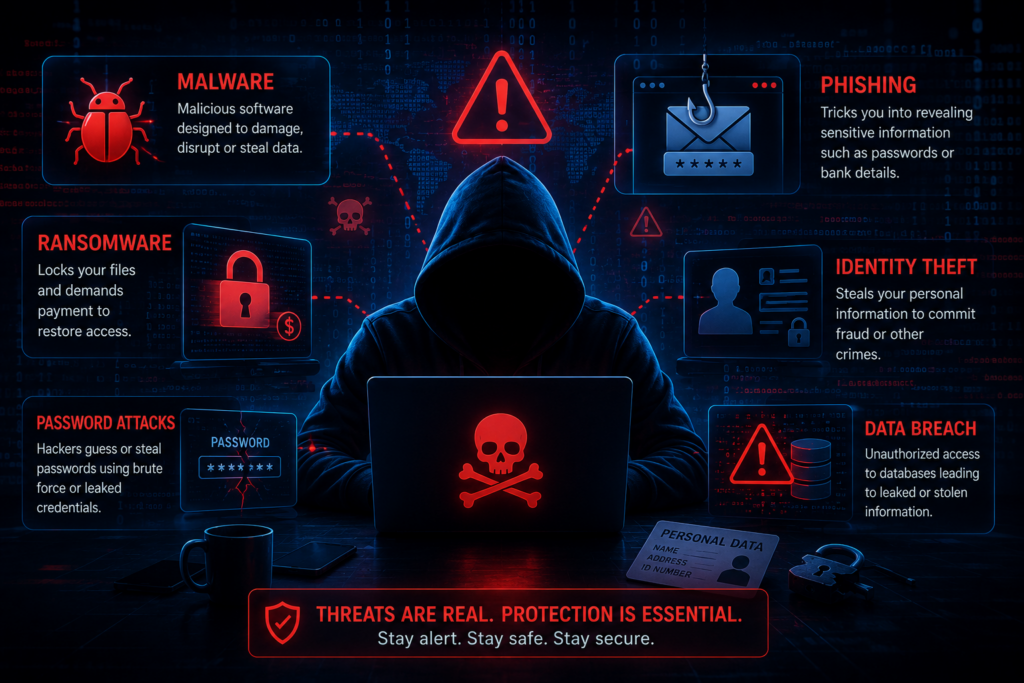
How Cybercriminals Attack
Modern cyberattacks rely on both technology and psychology. Instead of simply hacking systems, attackers often manipulate people into revealing sensitive information.
Common attack methods include fake login pages, malicious software downloads, public Wi-Fi attacks, social engineering, QR-code scams, browser vulnerabilities, and compromised mobile applications. Many attacks begin with something as simple as clicking an unsafe link or downloading an infected file.
Because human error remains one of the biggest security risks, awareness is often the strongest defense.
Essential Cybersecurity Tools
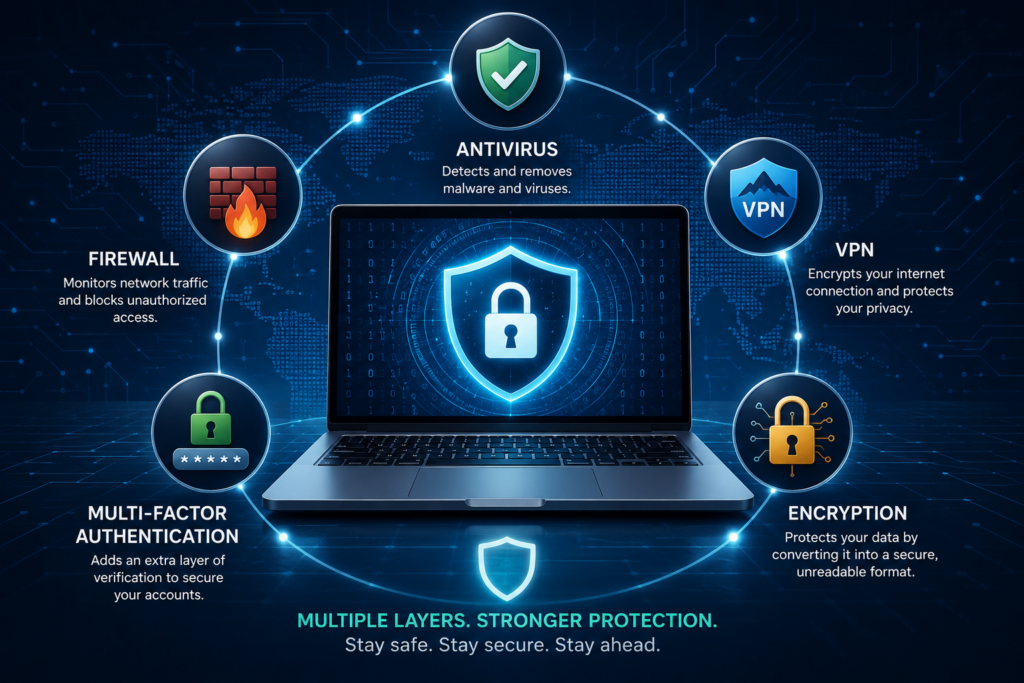
Several security technologies work together to protect your devices and personal information.
| Tool | Purpose |
|---|---|
| Antivirus | Detects and removes malware |
| Firewall | Blocks suspicious network traffic |
| VPN | Encrypts internet connections |
| Password Manager | Creates and stores secure passwords |
| Multi-Factor Authentication | Adds an extra verification layer |
| Encryption | Protects sensitive information |
Using these tools together creates multiple layers of protection instead of relying on a single security solution.
AI and the Future of Cybersecurity
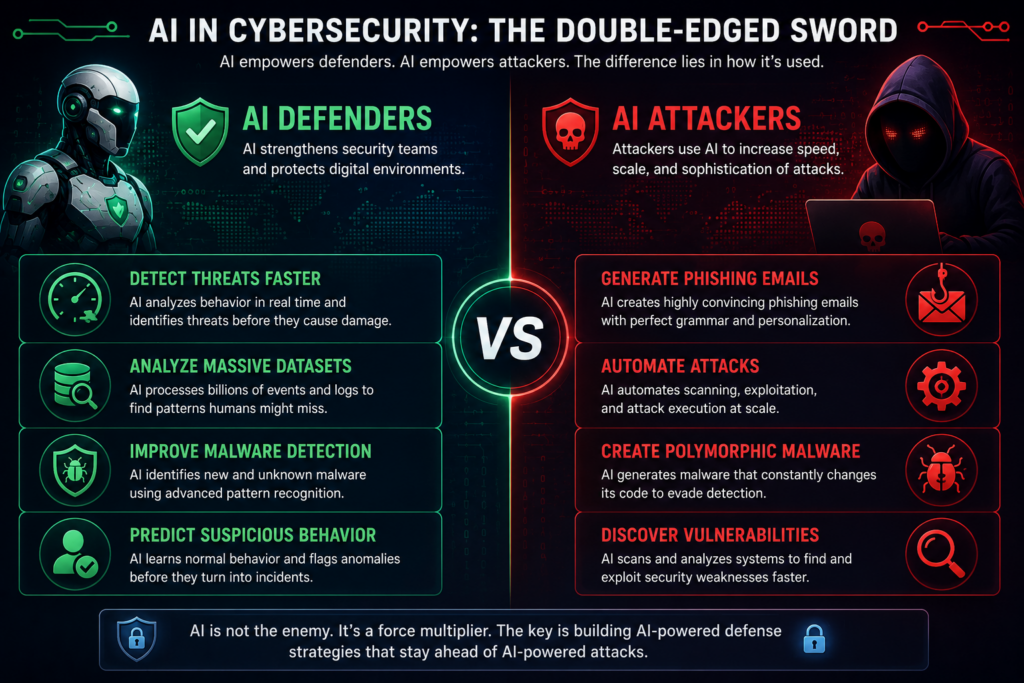
Artificial intelligence is changing cybersecurity faster than ever before. Security companies now use AI to detect unusual activity, analyze billions of events, identify malware, and automate threat detection within seconds.
However, cybercriminals are also using AI to generate convincing phishing emails, automate attacks, and create increasingly sophisticated malware. This ongoing race between attackers and defenders means cybersecurity will continue evolving alongside artificial intelligence.
Rather than replacing human experts, AI is becoming a powerful assistant that helps security professionals respond more quickly and accurately.
Cybersecurity Best Practices
Strong cybersecurity doesn’t require expensive software. It begins with everyday habits.
Keeping your operating system updated, using unique passwords, enabling multi-factor authentication, avoiding suspicious links, downloading software only from trusted sources, and regularly backing up important files can dramatically reduce your chances of becoming a victim of cybercrime.
Consistency matters more than complexity. Small improvements in your daily digital habits often provide the greatest protection.
Frequently Asked Questions
Is cybersecurity only important for businesses?
No. Every internet user benefits from cybersecurity because personal accounts, devices, and financial information are frequent targets of cybercriminals.
Can antivirus software stop every cyberattack?
No. Antivirus software is only one layer of protection. Safe browsing habits, software updates, and multi-factor authentication are equally important.
Should everyone use multi-factor authentication?
Yes. It significantly reduces the risk of unauthorized account access, even if a password is compromised.
What is the most common cyber threat today?
Phishing remains one of the most common and effective cyberattacks because it targets human behavior rather than technical vulnerabilities.
Final Thoughts
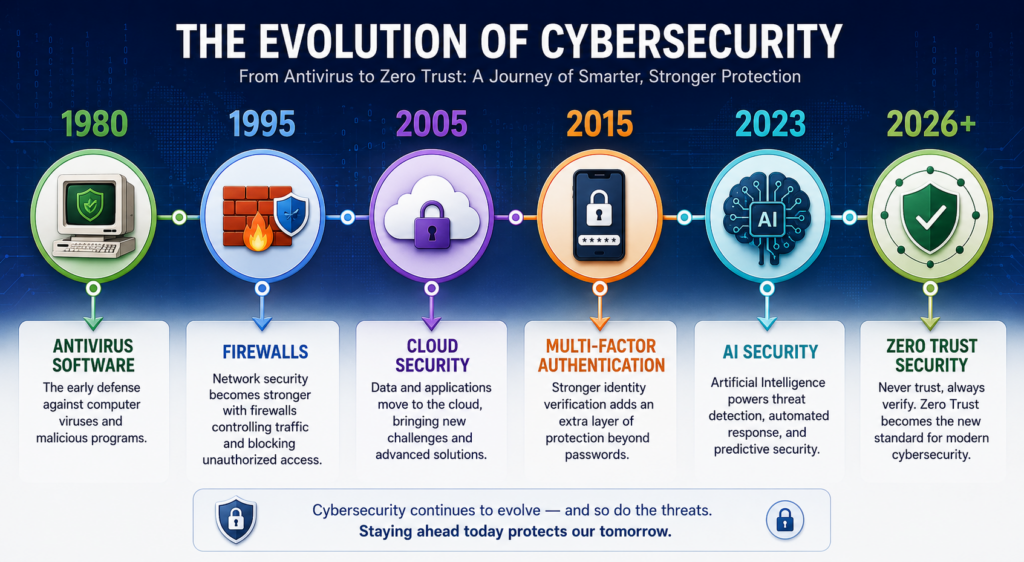
Cybersecurity has become an essential life skill rather than a technical specialty. Whether you’re using a smartphone, managing online banking, working remotely, or storing family photos in the cloud, your digital life deserves the same level of protection as your physical belongings.
Understanding common cyber threats, adopting smart online habits, and using trusted security tools can dramatically reduce your risk of becoming a victim of cybercrime. As technology continues to evolve, staying informed remains your strongest defense.