




The global artificial intelligence race has largely been defined by model intelligence, chatbot capabilities, and increasingly powerful consumer-facing AI products. Yet one of the most important battles shaping the future of artificial intelligence is happening far away from public attention inside data centers where companies are struggling with a far more difficult problem: the enormous cost of keeping large language models running every second of every day.
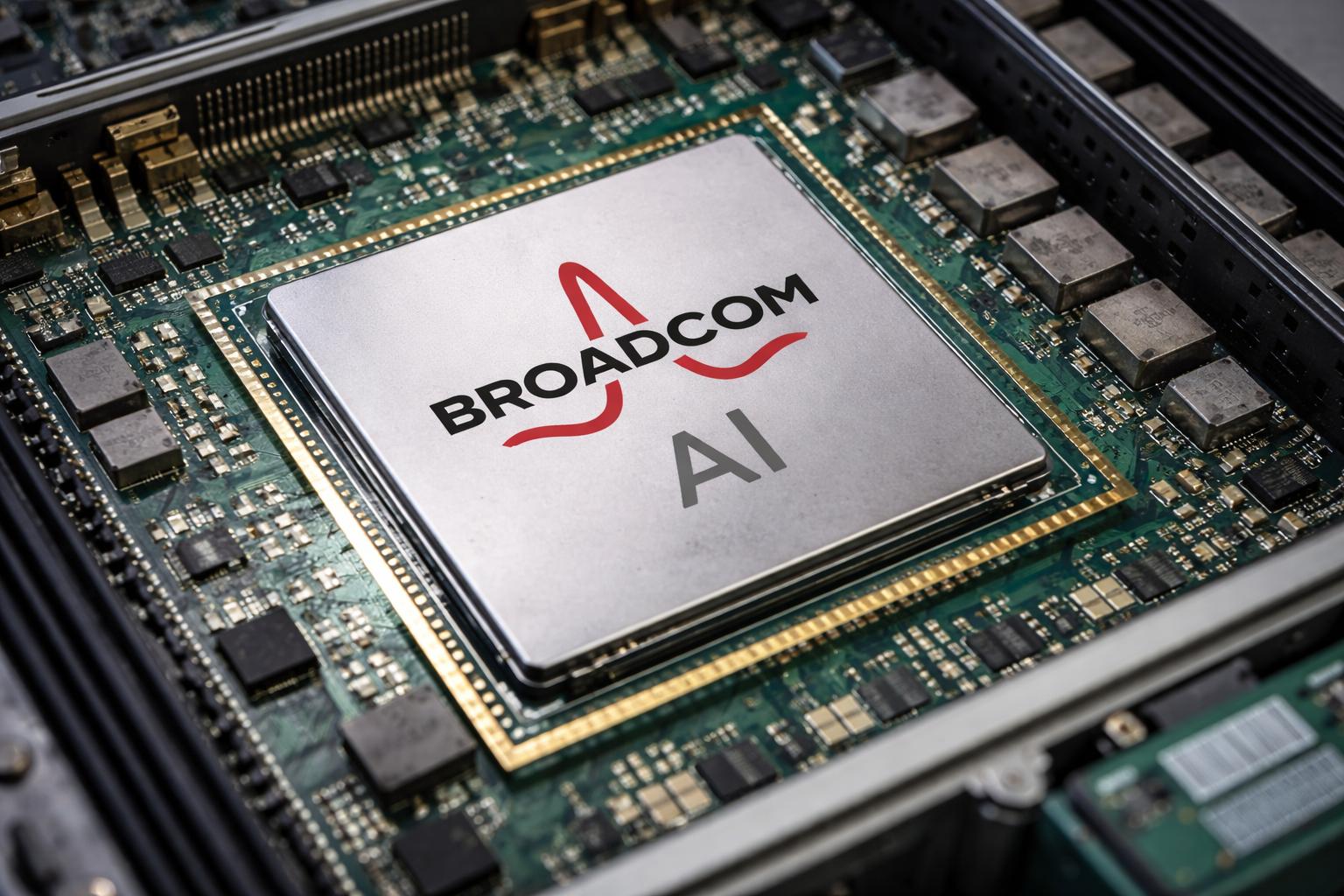
OpenAI’s latest custom silicon project, internally known as Jalapeño, reveals just how serious this challenge has become. The company has reportedly partnered with semiconductor giant Broadcom to develop its first fully custom AI accelerator designed specifically for inference workloads — the continuous process responsible for generating responses every time users interact with systems like ChatGPT. Unlike model training, which happens during a limited development cycle, inference costs continue indefinitely for the entire lifetime of the product.
This project is not simply a hardware experiment. It may represent one of OpenAI’s most important financial survival strategies as operating costs continue rising aggressively.
The Real Cost Of Artificial Intelligence Begins After Training Ends
Public conversations surrounding artificial intelligence often focus heavily on model training, the highly expensive process requiring months of computation to build advanced large language models. However, training represents only the first stage of the financial burden. The far larger challenge begins once the product becomes available to users.
Every prompt submitted through ChatGPT consumes compute resources, triggers inference workloads, allocates server capacity, consumes electricity, and continuously generates infrastructure costs that never stop accumulating. Unlike training, which eventually ends after development completes, inference continues operating permanently for as long as millions of users keep interacting with the product.
This economic pressure has rapidly become one of the most expensive operational challenges facing modern AI companies.
Industry estimates suggest OpenAI’s inference-related infrastructure costs reached approximately $8.4 billion during 2025, with projections suggesting those costs could exceed $14 billion during 2026 as global demand continues accelerating. At the same time, OpenAI’s gross margins reportedly declined from 40 percent during 2024 to roughly 33 percent in 2025, while total annual spending reached approximately $34 billion against revenue near $13 billion, leaving the company facing an estimated operating loss approaching $21 billion.
More Read






The economics of artificial intelligence are becoming increasingly difficult to sustain.
Jalapeño Is OpenAI’s Attempt To Control Inference Economics

Rather than continuing to depend entirely on expensive third-party AI hardware, OpenAI appears to be building custom infrastructure optimized specifically for the workloads powering ChatGPT itself. The Jalapeño processor has reportedly been engineered as a dedicated ASIC (Application-Specific Integrated Circuit) built exclusively for large language model inference.
Unlike general-purpose AI accelerators designed to serve multiple types of workloads, Jalapeño is being built around the exact computational patterns OpenAI already understands deeply through operating ChatGPT and its broader API ecosystem every day.
This includes memory allocation behavior, networking requirements, model serving systems, and internal computation kernels tuned specifically around OpenAI’s own infrastructure environment.
The strategy is simple.
A chip designed exclusively around one workload can often operate far more efficiently than hardware designed for broader general-purpose use.
The Engineering Timeline Has Surprised Semiconductor Experts
One of the most remarkable technical details surrounding the Jalapeño project involves development speed. Advanced semiconductor projects often require years before reaching tape-out — the critical engineering stage where chip architecture becomes finalized before manufacturing begins.
OpenAI and Broadcom reportedly completed this cycle in only nine months.
That unusually aggressive timeline has immediately attracted attention inside the semiconductor industry because advanced silicon projects operating at this level of complexity rarely move so quickly. Rather than adapting existing accelerator architecture built for other workloads, OpenAI reportedly began development entirely from scratch.
The company used its own deep infrastructure knowledge gained from running ChatGPT at global scale to design the chip architecture directly around its own serving patterns.
Interestingly, OpenAI also reportedly used its own AI systems internally during portions of the chip optimization and development process.
Artificial intelligence is now helping design the hardware required to power future artificial intelligence itself.
“The next phase of artificial intelligence competition may no longer be defined only by building smarter models, but by controlling the hardware infrastructure capable of running them more efficiently than anyone else.”
Early Performance Data Suggests Major Cost Reduction Potential
One of the most closely watched figures surrounding the Jalapeño project comes from early engineering estimates suggesting the chip may reduce operating costs by approximately 50 percent compared with conventional AI GPUs currently powering most large-scale language models.
While these figures still require broader technical validation, even partial success at that efficiency level could dramatically reshape the economics of artificial intelligence.
Infrastructure cost reduction depends on far more than silicon pricing alone. Power consumption, server utilization efficiency, memory movement optimization, networking overhead, and workload balancing all contribute significantly to total operating cost.
OpenAI engineers reportedly designed Jalapeño specifically to reduce unnecessary data movement while keeping real-world workload performance operating much closer to theoretical hardware limits.
For a company already spending billions annually on inference infrastructure, even modest efficiency improvements could save extraordinary amounts of money.
OpenAI Is Joining A Growing Race To Build Proprietary AI Silicon
OpenAI’s move reflects a much larger transformation currently unfolding across the technology industry as major AI companies increasingly begin designing their own custom silicon rather than relying entirely on traditional GPU suppliers.
Specialized chips allow companies to optimize hardware around their own internal workloads while reducing long-term dependence on increasingly expensive third-party infrastructure providers.
The race is rapidly expanding across the broader industry.
Companies Building Custom AI Hardware
| Company | Custom AI Chip | Primary Purpose |
|---|---|---|
| OpenAI | Jalapeño | Large Language Model Inference |
| TPU | Model Training + Inference | |
| Amazon | Trainium / Inferentia | Cloud AI Workloads via AWS |
| Microsoft | Maia 200 | AI Inference for Azure Models |
| Meta | MTIA | Generative AI + Recommendation Systems |
The semiconductor industry is quickly becoming one of the most important battlegrounds shaping artificial intelligence competition.
Jalapeño Technical Specifications Currently Reported
| Specification | Reported Details |
|---|---|
| Chip Name | Jalapeño |
| Chip Type | ASIC AI Accelerator |
| Designed By | OpenAI |
| Silicon Partner | Broadcom |
| Manufacturing Partner | TSMC |
| Process Node | 3nm |
| Development Time | 9 Months |
| Current Internal Testing | GPT-5.3 Codex Spark |
| Claimed Cost Advantage | Around 50% Lower Than Current GPUs |
| Expected Deployment | Late 2026 |
The Future Of Artificial Intelligence May Depend On Hardware Economics
Much of the public conversation surrounding artificial intelligence remains centered around software breakthroughs, smarter chatbots, and rapidly improving model capabilities. Yet the future sustainability of artificial intelligence may depend just as heavily on solving a far less visible problem.
Can companies afford to keep running increasingly expensive models at global scale without infrastructure costs swallowing profitability entirely?
OpenAI’s Jalapeño project suggests the industry increasingly recognizes that better software alone is not enough.
The future of artificial intelligence will increasingly be determined by the companies capable of designing hardware powerful enough to serve billions of AI interactions while keeping long-term operating costs under control.
Artificial intelligence is no longer only a software race. It is rapidly becoming a silicon race.