


The AI Memory Crisis is becoming one of the most important problems facing the technology industry, and it could eventually affect something sitting much closer to home: the price of your next PC, laptop, smartphone or gaming machine. Artificial intelligence data centers are consuming enormous quantities of high-bandwidth memory, server DRAM and high-performance storage, while manufacturers are redirecting production toward these higher-value products. TrendForce says DRAM supply is expected to remain tight through 2027, with AI continuing to be the primary driver of memory demand.
The situation isn’t as simple as saying “AI is stealing RAM from consumers.” Different types of memory are manufactured for different purposes, and HBM used in AI accelerators isn’t the same product as the DDR5 memory installed in a gaming PC. However, semiconductor manufacturing capacity, investment decisions and production priorities are interconnected. When manufacturers dedicate more capacity to AI-related products, consumer memory can become tighter and more expensive. That is what makes the AI Memory Crisis worth watching.
Why the AI Memory Crisis Is Happening
Modern AI systems need enormous amounts of memory to process increasingly complex models. Training is only part of the problem. As AI moves toward real-time inference, reasoning and agent-based workloads, data centers need memory and storage continuously available to keep models running efficiently. Micron says AI context lengths are increasing rapidly and that memory content per server has doubled over the past three years, highlighting how quickly the requirements of AI infrastructure are changing.
The important point is that AI is increasing demand across several layers of the memory hierarchy rather than creating demand for only one specialized component.
HBM Is at the Center of the AI Memory Crisis
High-bandwidth memory, commonly known as HBM, has become one of the most important components in modern AI infrastructure. Unlike conventional PC memory, HBM is designed to deliver enormous amounts of data to AI accelerators at extremely high bandwidth.
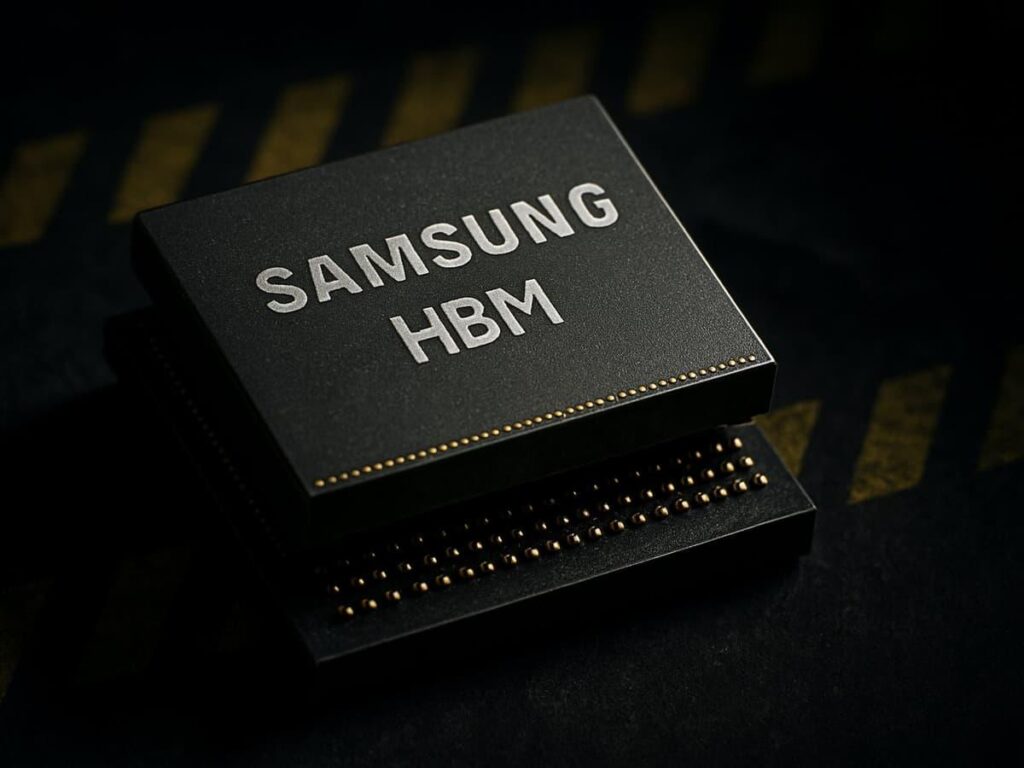
Samsung began mass production and commercial shipments of HBM4 in February 2026. Its HBM4 can deliver up to 13Gbps and up to 3.3TB/s of bandwidth per stack, with capacities reaching 36GB for 12-layer configurations and up to 48GB using 16-layer stacking. Samsung says it expects HBM sales to more than triple in 2026 compared with 2025. Samsung has also started shipping samples of its next-generation HBM4E to major customers, showing that the company expects AI-memory demand to continue beyond the current generation. This is important because HBM production requires advanced manufacturing and packaging resources. The more capacity manufacturers dedicate to these products, the more carefully they have to balance production across other memory categories.
Samsung Is Expanding Memory for AI
Samsung’s strategy demonstrates how seriously the industry is taking the AI memory market. The company isn’t only increasing HBM production; it is developing new memory architectures and storage technologies aimed specifically at AI workloads. In August, Samsung introduced its V10 Bonding V-NAND technology, which the company says increases storage density by 58% compared with its previous V9 generation. Samsung also unveiled concepts including zHBM and zNAND-O as it looks toward future AI infrastructure. Samsung’s semiconductor business has also continued announcing new AI-focused products throughout 2026, including HBM4, HBM4E, advanced SSDs and next-generation mobile memory.
More Read




This matters because AI is no longer simply a GPU story. Memory and storage are becoming increasingly important parts of the AI infrastructure equation.
Micron Is Betting Billions on AI Memory
Micron is taking an equally aggressive approach. The company says its portfolio now spans HBM, server DRAM, LPDDR, NAND and data-center SSDs specifically designed for AI workloads. Micron says its HBM4 36GB 12-high product can deliver a 2.6x increase in large-language-model inference throughput under its stated test conditions when bandwidth doubles. Micron has also announced major manufacturing investments in the United States as it attempts to expand memory capacity for what it expects to be sustained demand. The scale of these investments demonstrates an important reality: the industry doesn’t expect AI memory demand to disappear anytime soon.
SK hynix Is Also Expanding AI Memory Capacity
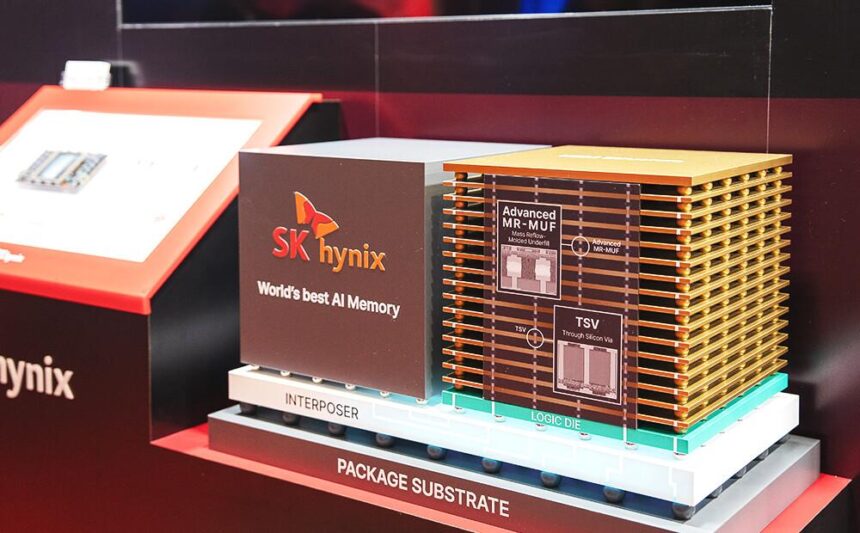
SK hynix is another critical player in the HBM market and has been one of the companies benefiting most directly from the AI infrastructure boom. The company is investing heavily in new semiconductor manufacturing facilities while expanding its advanced memory capabilities. Reuters recently reported that SK hynix approved a 54.3 trillion won investment plan for new semiconductor factories in South Korea, with the expansion aimed at meeting growing demand for advanced memory. That investment will not immediately solve today’s shortage.
Semiconductor factories take years to construct, equip and bring to high-volume production. As a result, the market can remain tight even while manufacturers are spending enormous amounts of money to increase future capacity.
How the AI Memory Crisis Could Affect RAM Prices
This is where the issue becomes much more relevant to ordinary PC users. TrendForce reported that major DRAM manufacturers are prioritizing server products in the third quarter of 2026, squeezing consumer DRAM supply. The company expects the DRAM market to remain extremely tight, while AI-server demand continues supporting prices. TrendForce also reported earlier in 2026 that conventional DRAM contract prices experienced exceptionally large increases, illustrating just how severe the memory market’s supply imbalance has become.
That doesn’t mean retail RAM prices will rise by exactly the same percentage as semiconductor contract prices. Retail pricing depends on distributors, inventories, currencies, product specifications and other factors. But the direction of the underlying market is clear. For someone planning a PC upgrade, memory pricing is therefore becoming a much more important part of the overall budget.
Why Gaming PCs Could Become More Expensive
Gaming PCs are exposed to several parts of the semiconductor supply chain simultaneously. A modern gaming system needs system RAM, GPU memory and SSD storage. While AI doesn’t directly consume the exact same memory modules used in every gaming PC, the underlying semiconductor industry is increasingly prioritizing high-value AI and server products. That creates pressure elsewhere. A gaming PC manufacturer facing higher memory costs has several choices: raise the retail price, reduce the amount of memory included, absorb the additional cost or redesign the product around different components. For consumers, the result could be higher prices or less generous specifications. The situation is particularly important for gaming laptops, where manufacturers already operate within tighter thermal, power and cost constraints.
Could the AI Memory Crisis Affect Smartphones?
Smartphones are another major consumer category worth watching. Modern phones increasingly use LPDDR memory for both conventional applications and on-device AI. AI features such as local image processing, voice recognition and generative AI can require additional memory capacity and bandwidth.
Micron says AI is expanding beyond data centers toward PCs, smartphones, vehicles and other edge devices, increasing the importance of higher-density memory across the entire computing ecosystem. The pressure could appear in several ways. There is already evidence that device manufacturers are looking for alternative memory suppliers. Reuters reported that Apple is reportedly testing memory from China’s CXMT for potential use in iPhones and MacBooks, although Reuters noted that the report has not been independently verified and neither Apple nor CXMT commented. That development is particularly interesting because it shows how seriously manufacturers are considering alternatives as memory supply tightens.
Why SSD Prices Could Also Rise
RAM isn’t the only component affected by the AI infrastructure boom. AI systems need enormous quantities of storage for datasets, models, caches and other information. Enterprise SSDs are increasingly becoming a critical part of AI data centers. TrendForce says NAND demand has remained strong through 2026, although its outlook suggests NAND supply conditions could begin easing during the second half of 2027 as production growth catches up with demand. That creates an important distinction.
DRAM could remain structurally tight for longer, while NAND may eventually see supply relief sooner.
Consumers should therefore avoid treating RAM and SSD pricing as exactly the same market.
The Memory Crisis Is Not Only About AI
AI is the biggest new source of demand, but several other factors also influence memory prices. Manufacturers have to balance production between consumer electronics, smartphones, servers, automotive systems and data centers. Inventory levels, factory utilization, technology transitions and capital expenditure all influence pricing. That’s why it would be misleading to claim that AI is solely responsible for every increase. The better explanation is that AI has dramatically changed the demand equation at exactly the time the semiconductor industry is still managing limited manufacturing capacity and long expansion cycles. TrendForce’s latest outlook supports this broader view, with AI remaining the primary memory-demand driver while DRAM supply is expected to stay tight into 2027.
When Could the AI Memory Crisis Improve?
There is some good news. Samsung, SK hynix and Micron are all expanding their advanced-memory capabilities. New manufacturing capacity should eventually increase supply and reduce some of the pressure. But there is a timing problem. A semiconductor fab cannot be built overnight. Even after construction is complete, manufacturers have to install equipment, qualify processes, improve yields and ramp production. That means today’s investments could take years to have their full impact. TrendForce currently expects DRAM supply conditions to remain tight through 2027, while NAND supply could improve during the second half of 2027. So consumers shouldn’t expect an immediate return to cheap memory.
What Should Consumers Do?
There is no universal reason to rush out and buy RAM or a new PC simply because of the current memory market. However, buyers should pay closer attention to memory pricing than they might normally do. When building a gaming PC, compare the total system cost rather than focusing only on the GPU. Laptop buyers should also check whether the RAM is upgradeable or soldered, since that can make a major difference over the life of the device. Smartphone shoppers can compare memory configurations across models instead of assuming that a higher price automatically means better value. For PC upgrades, buying 64GB of RAM or a massive SSD may also be unnecessary if your actual workload doesn’t require that capacity.
The smarter approach is to buy according to your needs rather than paying a large premium simply to future-proof your hardware. That should remove the consecutive sentences warning while making the section sound more natural and human.
AI Memory Crisis: What It Means for Consumers
The most important thing to understand about the AI Memory Crisis is that consumers aren’t necessarily competing directly with AI companies for the exact same memory modules. Instead, consumers are affected by the decisions being made throughout the semiconductor supply chain.
When manufacturers prioritize high-margin HBM and server memory, they dedicate resources to those products. When AI companies sign long-term agreements to secure supply, less flexible capacity can remain for other markets. And when new factories take years to come online, supply cannot immediately respond to sudden increases in demand. That’s how an AI boom can eventually influence the price of a gaming PC sitting in a store thousands of miles away from a data center.
GizmoAlert’s Take on the AI Memory Crisis
The AI Memory Crisis may become one of the most important hardware stories of the next two years because it connects the seemingly separate worlds of AI infrastructure and everyday consumer technology. Samsung is expanding HBM4 and HBM4E. Micron is building out its AI-memory portfolio. SK hynix is investing heavily in additional manufacturing capacity. At the same time, TrendForce expects DRAM supply to remain tight through 2027.
The interesting question isn’t whether AI will consume more memory. The question is whether semiconductor manufacturers can expand production quickly enough to satisfy AI companies without forcing consumers to pay substantially more for the memory inside everyday devices.
Final Thoughts
The AI Memory Crisis is a reminder that artificial intelligence isn’t just changing software. It is changing the physical infrastructure of computing. AI data centers need HBM. They need server DRAM. They need high-capacity SSDs. And they need enormous amounts of electricity and cooling infrastructure to operate all of it. Samsung, Micron and SK hynix are responding with billions of dollars of investment and increasingly advanced memory technologies. But those investments take time. Until new capacity catches up with demand, consumers could continue to see pressure on RAM, storage and device prices. So the next time you see an AI company announce another enormous data center, remember that the story isn’t only about GPUs.
The AI revolution needs memory too — and your next PC or smartphone may feel the consequences.