




The foldable smartphone market has matured rapidly over the past few years. What once felt like an experimental category filled with compromises has evolved into a premium segment where brands compete on durability, camera quality, software experiences, and artificial intelligence. Google entered this space with the Pixel Fold before refining the concept through subsequent generations. Now, all eyes are on the upcoming Google Pixel 11 Pro Fold, which is expected to be unveiled during Google’s “Made by Google” event on August 12. Based on multiple reports, leaks, and industry sources, Google’s newest foldable appears set to focus on refinement rather than radical redesign, while leveraging the company’s growing AI ecosystem and new Tensor G6 chipset.
Google Pixel 11 Pro Fold Launch Date and Availability
Google has officially scheduled its next Made by Google event for August 12, where the Pixel 11 lineup is expected to take center stage. Multiple industry reports suggest that the Pixel 11 Pro Fold will be announced alongside the Pixel 11, Pixel 11 Pro, Pixel 11 Pro XL, Pixel Watch 5, and updated Pixel Buds. Some retail leaks indicate pre-orders could begin immediately after the announcement, with commercial availability potentially starting around August 20. While Google has not officially confirmed every detail, the timing aligns with the company’s recent shift toward late-summer hardware launches.
Expected Timeline
| Event | Expected Date |
|---|---|
| Made by Google Event | August 12, 2026 |
| Pre-orders Begin | August 12, 2026 |
| Retail Availability | Around August 20, 2026 |
| Global Rollout | Late August 2026 |
Google Pixel 11 Pro Fold Design Appears Familiar but More Refined
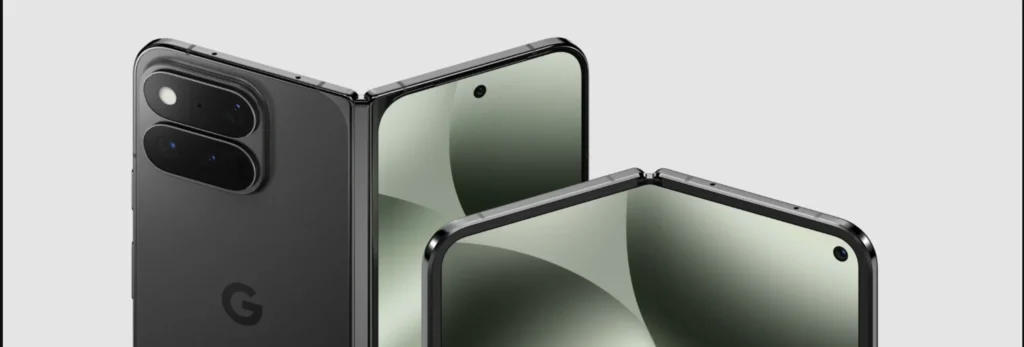
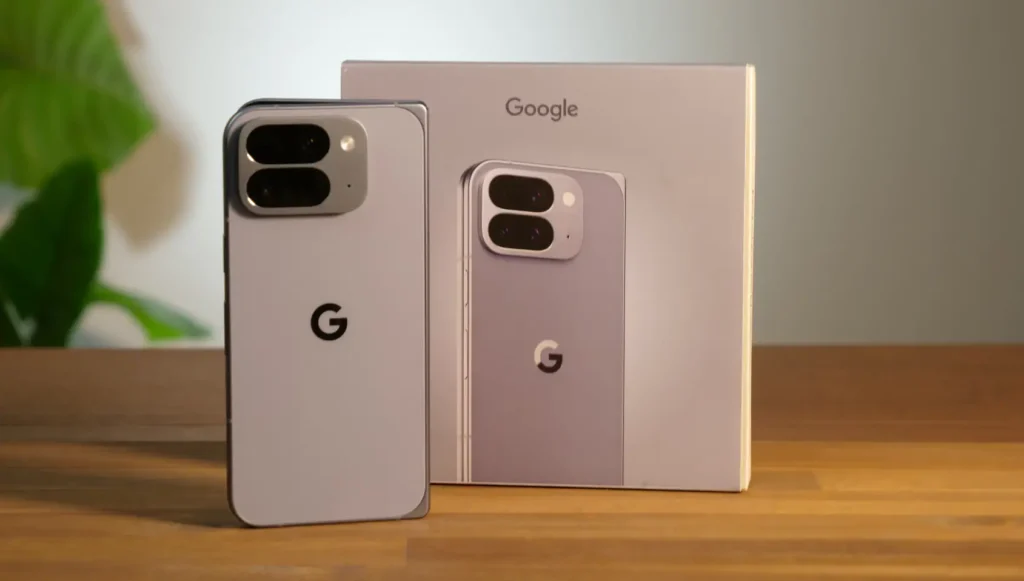
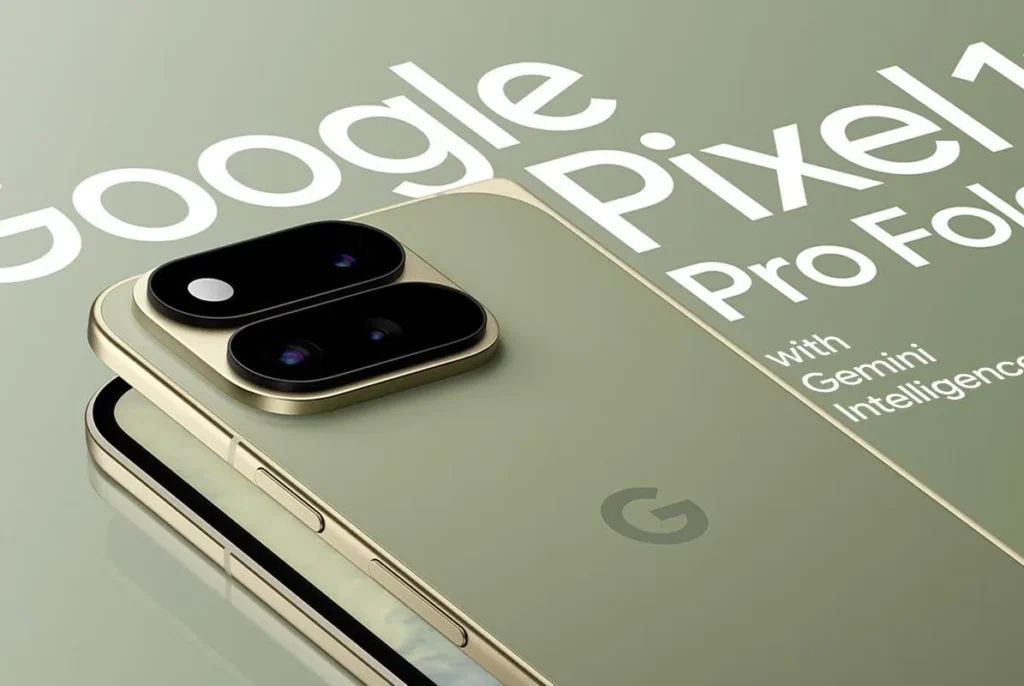
If the leaks are accurate, the Pixel 11 Pro Fold will retain much of the design language introduced by its predecessor. Marketing renders that recently surfaced show a familiar foldable form factor with a tall external display and a large internal screen. However, Google appears to have refined several aspects of the hardware. The camera module has reportedly been redesigned, creating a cleaner and more symmetrical appearance. Leaked images also reveal new color options, including an olive-green or pine-inspired finish that could become one of the standout color variants for the device. Rather than completely reinventing the foldable design, Google seems focused on making incremental improvements that enhance usability and aesthetics.
Display Could Remain One of the Best in the Foldable Market
One of the strongest aspects of Google’s foldable lineup has been its display experience, and the Pixel 11 Pro Fold is expected to continue that trend. According to multiple leaks, the device will feature a 6.3-inch external display paired with a large 8-inch internal foldable screen. These dimensions closely mirror the previous generation, suggesting Google is confident in the current form factor. The wider outer display remains a key advantage over some competing foldables because it feels more like a traditional smartphone when folded. Reports indicate Google will continue focusing on color accuracy, brightness, and smooth refresh rates to deliver a premium viewing experience.
Expected Display Specifications
| Specification | Expected Details |
|---|---|
| Cover Display | 6.3-inch OLED |
| Main Display | 8.0-inch Foldable OLED |
| Refresh Rate | Up to 120Hz |
| HDR Support | Expected |
| Resolution (Inner) | 2076 x 2160 |
| Resolution (Outer) | 1080 x 2342 |
Tensor G6 Could Be the Biggest Upgrade
The most significant upgrade may come from Google’s next-generation Tensor G6 processor. Several reports indicate that the Tensor G6 could be built on a more advanced manufacturing process than previous Tensor chips, improving efficiency, thermal management, and overall performance. Google’s AI strategy continues to revolve around Tensor silicon, which is designed not only for raw computing power but also for on-device machine learning tasks. This means users can expect improvements in real-time translation, image processing, voice recognition, photo editing, and Gemini-powered AI features. While benchmark results remain unavailable, industry observers expect Tensor G6 to deliver one of the largest year-over-year improvements in the history of Google’s custom silicon program.
Tensor G6 Expected Benefits
| Feature | Benefit |
|---|---|
| Improved Efficiency | Better battery life |
| Enhanced AI Processing | Faster Gemini features |
| Improved Thermals | Less overheating |
| Better Photography | Enhanced image processing |
| Faster Performance | Smoother multitasking |
Cameras May Receive Meaningful Improvements
Google’s Pixel phones have long been recognized for their photography capabilities, and the Pixel 11 Pro Fold is expected to continue that tradition. Leaks suggest Google may refine both hardware and computational photography features. The redesigned camera housing indicates changes beneath the surface, while Tensor G6 could further enhance image processing. Google’s software-based photography has consistently helped Pixel devices compete with rivals despite using smaller sensors than some competitors. Industry speculation points toward improvements in low-light photography, AI-enhanced zoom capabilities, portrait processing, and video stabilization. If these upgrades materialize, the Pixel 11 Pro Fold could become one of the strongest camera-focused foldables on the market.
Expected Camera Features
| Feature | Expected Improvement |
|---|---|
| Night Sight | Better low-light images |
| AI Zoom | Improved detail retention |
| Portrait Mode | More natural edge detection |
| Video Stabilization | Smoother footage |
| Computational Photography | Faster processing |
Artificial Intelligence Will Be Central to the Experience
Perhaps the most important aspect of the Google Pixel 11 Pro Fold will not be the hardware but the software. Google is rapidly expanding Gemini across Android, Search, Workspace, and Pixel devices. The foldable form factor offers unique opportunities for AI-assisted multitasking, research, content creation, and productivity. Users could benefit from AI-powered summaries, intelligent photo editing, contextual recommendations, real-time translations, and advanced voice interactions. As the broader AI Browser and AI Assistant wars continue to intensify across the technology industry, Google is expected to position the Pixel 11 Pro Fold as a showcase device for its most advanced AI experiences. The combination of foldable hardware and Gemini integration could help Google differentiate itself from Samsung, Motorola, and other foldable competitors.
More Read






Price Could Be Higher Than Previous Models
One area that may disappoint potential buyers is pricing. Multiple reports suggest the Pixel 11 series could experience price increases due to rising memory and component costs. Leaked pricing information points toward the Pixel 11 Pro Fold potentially starting around $1,899 in the United States. If accurate, this would position Google’s foldable firmly within the ultra-premium smartphone category. Although expensive, the device would still compete directly against Samsung’s latest Galaxy Z Fold models and other premium foldables. For buyers interested in cutting-edge hardware, AI capabilities, and Google’s software ecosystem, the higher price may be easier to justify.
Expected Pricing
| Model | Expected Starting Price |
|---|---|
| Pixel 11 | $899 |
| Pixel 11 Pro | $1,099 |
| Pixel 11 Pro XL | $1,299 |
| Google Pixel 11 Pro Fold | $1,899 |
How It Could Compare Against the Competition
The foldable market has become increasingly competitive. Samsung continues to dominate globally, while Motorola, Honor, Oppo, Huawei, and others push hardware innovation. Google’s strength has traditionally been software and AI rather than hardware experimentation. If the Pixel 11 Pro Fold successfully combines a refined design, strong camera performance, Gemini AI integration, and improved Tensor performance, it could appeal strongly to Android enthusiasts who value software experiences over extreme hardware specifications. The challenge will be convincing consumers that Google’s ecosystem advantages justify the premium pricing.
Foldable Flagship Comparison
| Device | Key Strength |
|---|---|
| Pixel 11 Pro Fold | AI and software experience |
| Galaxy Z Fold 8 Ultra | Hardware and ecosystem |
| Motorola Razr Fold | Design and portability |
| Honor Magic Fold | Thin design |
| OnePlus Open Successor | Value proposition |
GizmoAlert Insight
The Google Pixel 11 Pro Fold does not appear to be chasing gimmicks. Instead, Google seems focused on solving the problems that matter most to foldable users: battery life, performance, cameras, usability, and AI-powered productivity. While competitors often emphasize thinner designs or experimental hardware, Google’s strategy increasingly revolves around making AI genuinely useful. If Tensor G6 and Gemini deliver meaningful improvements, the Pixel 11 Pro Fold could become one of the most practical foldable smartphones available in 2026.
Conclusion
The Google Pixel 11 Pro Fold is shaping up to be one of the most important Android launches of the year. Although Google appears to be taking an evolutionary rather than revolutionary approach, the combination of Tensor G6, advanced AI features, refined hardware, and improved cameras could make it one of the strongest foldable smartphones on the market. With the official launch event just around the corner, the remaining questions revolve around pricing, battery performance, and whether Google’s AI ambitions can truly set the device apart from increasingly capable competitors. For now, the Pixel 11 Pro Fold looks poised to continue Google’s push toward making foldable phones smarter, more practical, and more accessible to mainstream users.














Awesome, been waiting for the same 🙂