

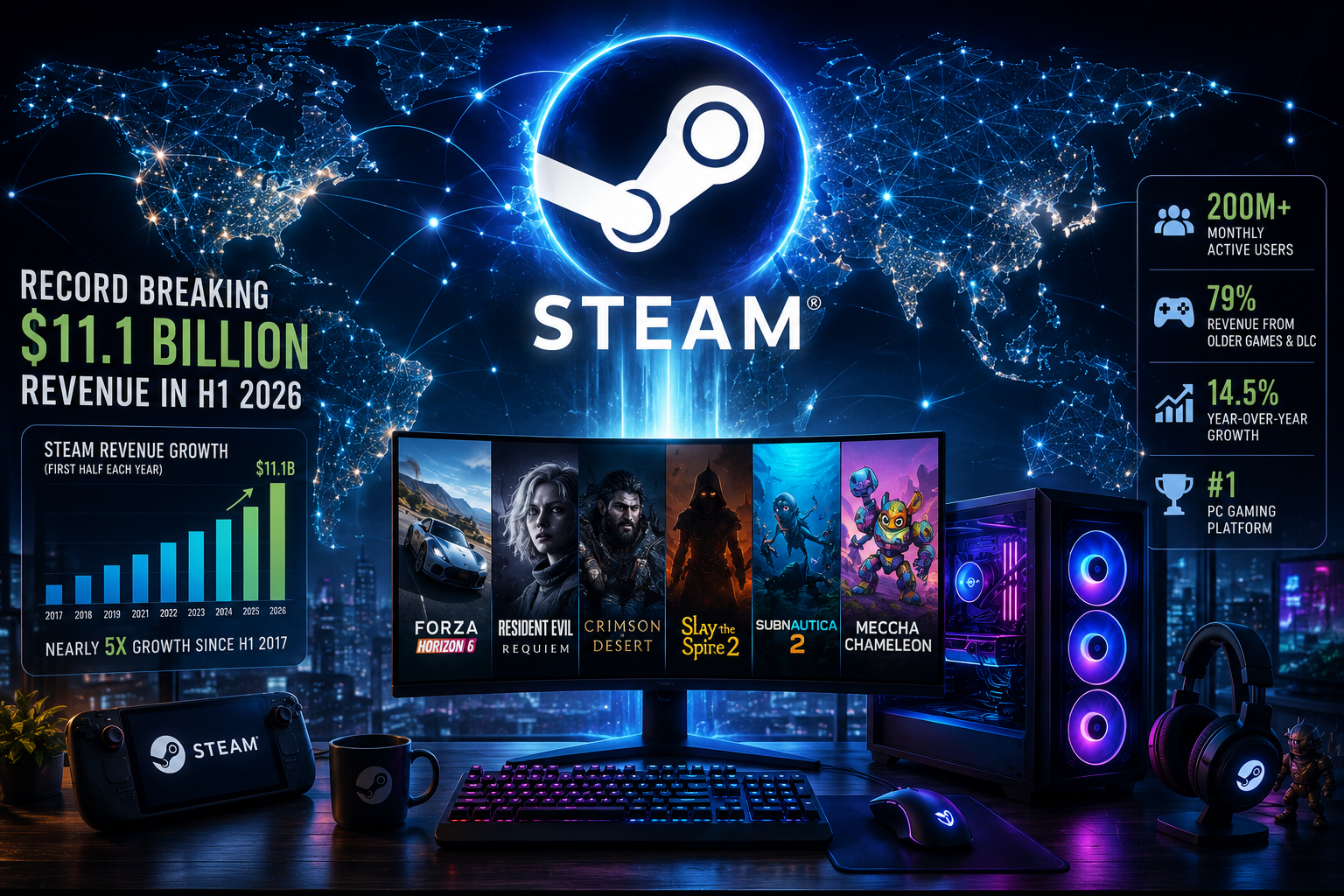


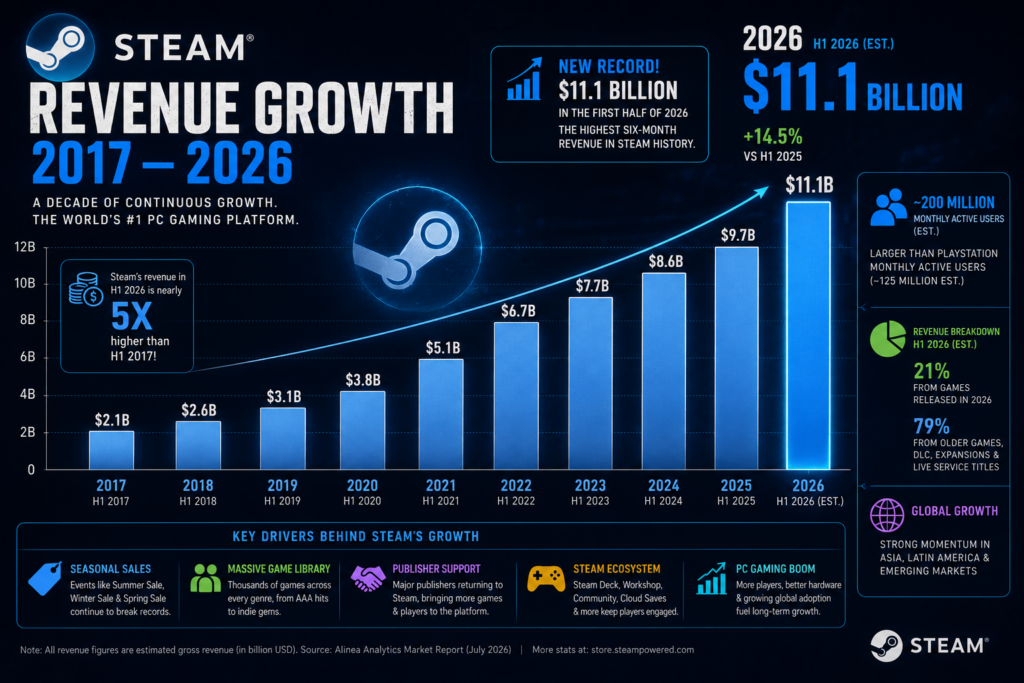
Valve’s Steam platform has achieved another remarkable milestone, with new industry estimates suggesting that it generated approximately $11.1 billion in gross revenue during the first half of 2026. If accurate, it marks the strongest six-month financial performance in Steam’s two-decade history and further strengthens PC gaming’s position as one of the fastest-growing sectors in the gaming industry. The numbers come from market research firm Alinea Analytics, whose latest report estimates Steam’s revenue grew 14.5% compared to the first half of 2025. Even more impressive, the platform reportedly earned 8% more than the traditionally stronger holiday period during the second half of 2025, when blockbuster launches and seasonal sales usually drive record-breaking revenue.
Steam’s Biggest Six Months Ever
Steam has steadily expanded over the past decade, but 2026 appears to be setting a new benchmark.
More Read






Industry analysts estimate that the platform generated nearly five times more revenue than it did during the first half of 2017. That growth reflects not only increasing numbers of PC gamers but also higher game prices, stronger digital adoption, and a larger global audience. Unlike previous years, Steam’s momentum isn’t being powered solely by brand-new releases.
Older Games Are Driving Most of the Money
One of the report’s biggest surprises is where Steam’s revenue actually comes from. Only 21% of Steam’s revenue during the first half of 2026 came from games released this year. The remaining 79% was generated by older titles, downloadable content (DLC), expansions, and long-running live-service games.
That trend suggests players are continuing to invest heavily in existing libraries rather than focusing exclusively on the latest releases. Seasonal discounts, major updates, multiplayer communities, and long-term support have allowed many older games to remain highly profitable years after launch.
GizmoAlert Insight: Steam’s biggest strength isn’t simply launching new blockbuster games—it’s keeping older titles alive through discounts, updates, community content, and frequent seasonal sales.
The Biggest Games of 2026 So Far
While older titles dominated overall revenue, several new releases delivered exceptional commercial success. According to the report, these games were among Steam’s strongest performers during the first half of the year:
| Game | Estimated Performance |
|---|---|
| Forza Horizon 6 | Top-grossing new release |
| Resident Evil Requiem | One of Steam’s biggest launches |
| Crimson Desert | Strong global debut |
| Slay the Spire 2 | Major Early Access success |
| Subnautica 2 | Strong launch revenue |
| Meccha Chameleon | Best-selling game by units sold |
These releases helped drive engagement across Steam while attracting millions of new and returning players.
Why Steam Keeps Growing
Several factors have contributed to Steam’s record-breaking performance. The platform continues to benefit from the return of major publishers that previously experimented with launching games exclusively through their own storefronts. Companies like Ubisoft have increasingly returned to Steam after recognizing the platform’s enormous audience and established ecosystem. Steam also continues to attract players through regular seasonal sales, community features such as Workshop support, achievements, cloud saves, and an expanding hardware ecosystem that includes the Steam Deck.
Another important contributor has been rapid growth in Asian markets, particularly China, where PC gaming continues to expand at an impressive pace.
Steam Is Now Larger Than PlayStation
Recent analyst estimates also suggest Steam has reached around 200 million monthly active users, making it substantially larger than PlayStation’s estimated 125 million monthly active users.
Although Valve has not officially confirmed updated user numbers, multiple analysts believe Steam has become the world’s largest dedicated PC gaming platform by monthly engagement. That continued growth reflects the increasing popularity of PC gaming, especially among younger players and international markets.
What This Means for the Gaming Industry
Steam’s latest milestone arrives during a period of major industry change. Sony has announced plans to transition future PlayStation releases toward digital-only distribution, while Microsoft continues expanding Xbox Game Pass across PC. Meanwhile, developers are increasingly launching games simultaneously across multiple platforms rather than focusing on console exclusivity.
For publishers, Steam’s enormous player base makes it increasingly difficult to ignore. Even companies that previously invested heavily in proprietary launchers are returning to Valve’s storefront because of its unmatched reach and strong consumer trust.
Is This Growth Sustainable?
Despite Steam’s record-breaking numbers, analysts caution that maintaining this pace won’t be easy. The gaming industry continues to face rising development costs, studio closures, layoffs, and increasing pressure to produce blockbuster titles. At the same time, many publishers are relying more heavily on established franchises and long-term live-service games instead of taking risks on new intellectual properties. Even so, Steam’s diverse catalog, strong community ecosystem, and growing global audience give the platform a significant advantage heading into the second half of 2026.
GizmoAlert Take
Steam’s estimated $11.1 billion first-half revenue highlights just how dominant Valve’s platform has become in today’s gaming industry. The results demonstrate that PC gaming continues to thrive, fueled by a combination of blockbuster releases, evergreen classics, thriving multiplayer communities, and millions of players returning during seasonal sales. As publishers continue embracing digital distribution, Steam appears well positioned to remain at the center of PC gaming for years to come.
If current trends continue, 2026 could become the biggest year in Steam’s history—and one of the most significant years the PC gaming industry has ever seen.