


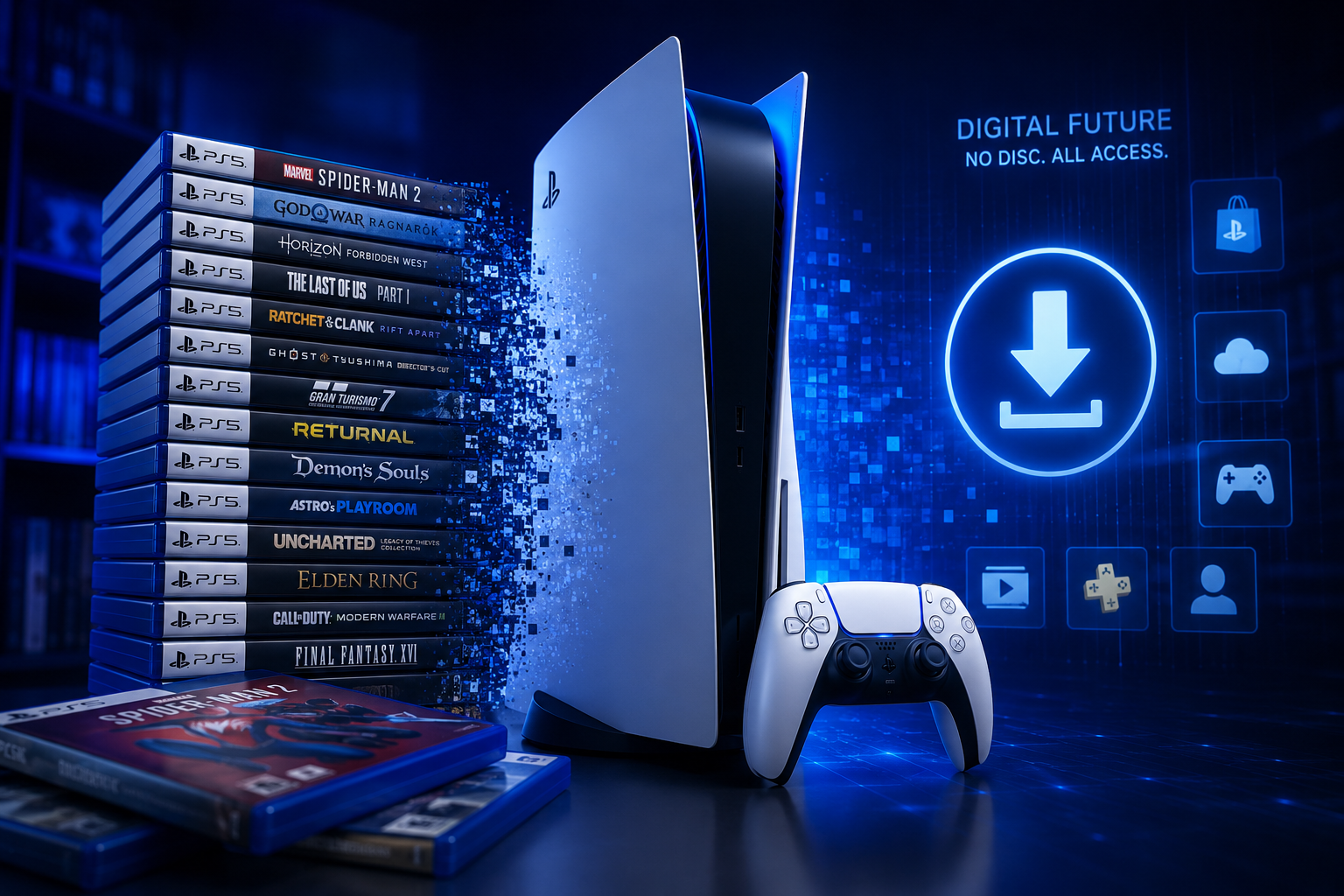


Sony has found itself at the center of one of the gaming industry’s biggest controversies after confirming that it will stop producing physical discs for all new PlayStation games beginning in January 2028. The company describes the move as a natural response to changing consumer habits, but many gamers see it as the end of an era—and potentially the beginning of a future where players own less while paying the same or even higher prices.
Within hours of Sony’s announcement, social media platforms were flooded with criticism, gaming communities organized petitions, and players began encouraging one another to cancel PlayStation Plus subscriptions. What started as a discussion about physical media has quickly expanded into a broader debate over digital ownership, consumer rights, game preservation, and the long-term direction of the gaming industry.
How the Controversy Began
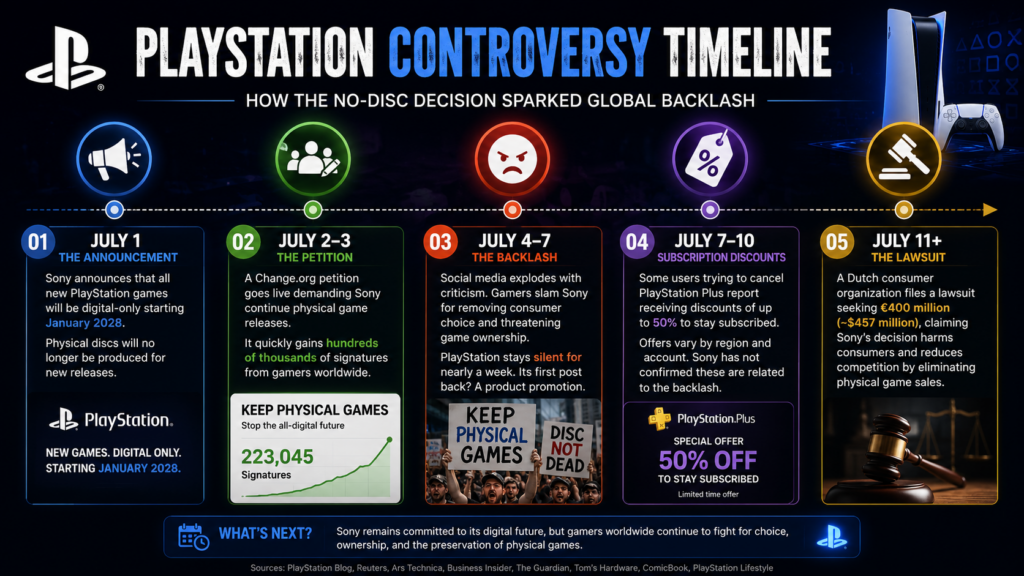
On July 1, Sony officially announced that all new PlayStation games released from January 2028 onward will be sold only in digital format through the PlayStation Store and participating retailers. Games already released—or scheduled to launch before that date—will continue to receive physical disc versions.
According to Sony, digital purchases now account for roughly 80% of full-game sales, making the transition a logical business decision. The company argued that consumer preferences have shifted significantly toward digital downloads and that focusing on digital distribution would allow it to better align with how most players purchase games today.
While the explanation made financial sense, many longtime PlayStation fans believed Sony overlooked what physical media represents beyond simple convenience.
Why Gamers Are So Angry
The strongest criticism isn’t about having to download games. Instead, it centers on ownership.
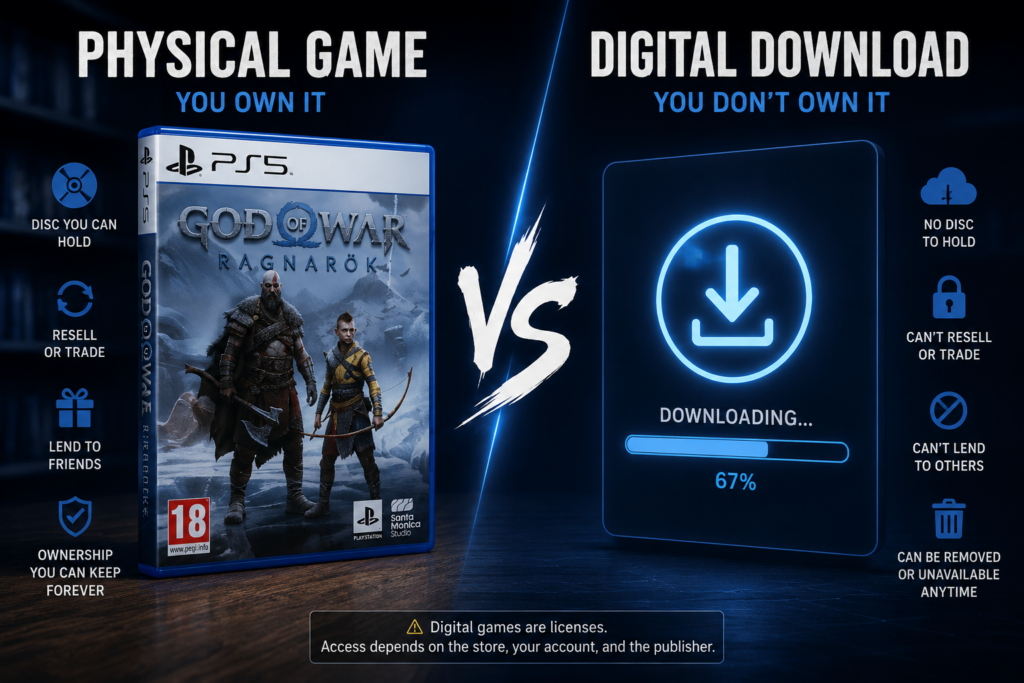
For decades, buying a game meant owning something tangible. Players could lend games to friends, sell them after finishing, collect limited editions, or preserve them for years without depending on online servers. A digital-only future changes that relationship completely.
More Read




Many players worry that digital purchases only grant a license to access content rather than permanent ownership. If licensing agreements change, stores eventually close, or publishers remove content, consumers could lose access to games they believed they had purchased permanently.
Recent examples involving digital movies disappearing from users’ libraries have only intensified those concerns, making many gamers question how secure digital ownership really is.
The Used Game Market Could Disappear
Another major concern involves the second-hand gaming market.
Physical discs have long allowed players to trade, lend, or resell games after completing them. Digital games remove that flexibility entirely. Critics argue this gives platform owners far greater control over pricing because players lose access to discounted used copies sold by retailers or private sellers.
Independent game stores also face uncertainty. Businesses built around buying and selling pre-owned games could lose an important source of revenue as physical releases gradually disappear.
GizmoAlert Insight: The backlash isn’t driven by nostalgia alone. Many players see physical discs as a form of consumer protection that preserves choice, competition, and long-term access to the games they purchase.
A Petition Quickly Gathered Hundreds of Thousands of Supporters
Public reaction escalated almost immediately.
A Change.org petition urging Sony to continue producing physical PlayStation games rapidly attracted hundreds of thousands of signatures, becoming one of the largest gaming-related petitions of the year. Supporters argue that physical media remains essential for collectors, preservationists, and players living in regions with slower or less reliable internet connections.
Many petition supporters also point to future hardware. Rumors surrounding an all-digital PlayStation 6 have made some fans worry that disc-based gaming could disappear entirely from Sony’s ecosystem.
Social Media Backlash Continued for Days
Sony’s announcement generated millions of views and tens of thousands of replies across social media platforms. Much of the conversation criticized the company for removing consumer choice rather than simply offering digital downloads alongside physical copies.
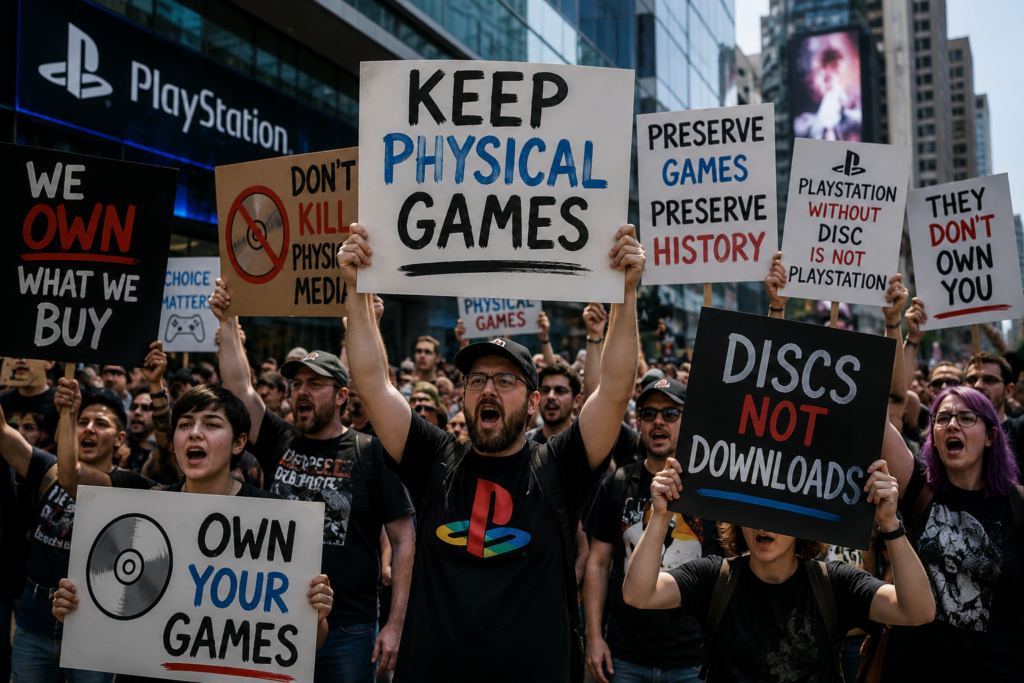
The situation became more noticeable when PlayStation’s official social media accounts remained largely silent following the announcement. When Sony eventually resumed posting, the company promoted products without directly addressing the growing criticism, leading many users to accuse the company of ignoring community concerns. At the same time, memes, parody posts, and criticism spread across Reddit, X, YouTube, and TikTok, with several gaming creators questioning whether the industry was moving too quickly toward an all-digital future.
PlayStation Plus Cancellations Added More Fuel
As frustration grew, some players encouraged others to cancel their PlayStation Plus subscriptions as a form of protest.
Soon afterward, reports began appearing that certain subscribers attempting to cancel were being offered discounts of up to 50% to remain subscribed. These offers varied depending on region, account history, and subscription tier, with some users seeing 25%, 33%, or 50% discounts while others received no offer at all. Sony has not stated that these discounts were introduced because of the backlash, and there is no official confirmation linking the offers to the physical-disc controversy. Many observers believe they are standard customer-retention promotions that happened to appear during the protests, although the timing fueled further discussion online.
Legal Challenges Have Already Started
The controversy has moved beyond social media.
A Dutch consumer organization has filed legal action seeking roughly €400 million (around $457 million), arguing that eliminating physical game sales could reduce competition and leave consumers with fewer choices. The complaint also raises concerns that digital-only distribution could weaken the resale market and strengthen Sony’s control over pricing through the PlayStation Store.
Whether the lawsuit succeeds remains uncertain, but it highlights how seriously some consumer groups view the transition.
Why Sony Is Unlikely to Reverse Course
Industry analysts believe Sony’s decision is driven primarily by economics.
Digital game sales eliminate manufacturing, packaging, shipping, and retail distribution costs. They also allow Sony to keep a larger share of each sale made through the PlayStation Store while maintaining greater control over pricing and promotions.
Although petitions and subscription cancellations have attracted attention, analysts argue that digital distribution is simply too profitable for Sony to abandon. Even if a relatively small number of subscribers cancel PlayStation Plus, the broader financial benefits of digital sales are expected to outweigh those losses.
What This Means for the Future of Gaming
Sony’s decision could influence the wider gaming industry for years to come.
If digital-only releases become the norm, future debates are likely to focus on digital ownership rights, game preservation, transferable licenses, and whether consumers should have greater control over the software they purchase.
For some players, the transition represents progress toward greater convenience. For others, it marks the gradual disappearance of one of gaming’s defining traditions.
Regardless of where the debate ends, one thing is already clear: Sony’s announcement has sparked a conversation that extends far beyond PlayStation. It has become a wider discussion about who truly owns digital entertainment in an increasingly online world.
Final Thoughts
Sony’s move toward a digital-only future may be commercially logical, but the reaction from the gaming community shows that physical media still holds significant value for many players.
The controversy has united collectors, preservation advocates, retailers, and everyday gamers around concerns that extend beyond plastic discs. Questions surrounding ownership, consumer rights, pricing, and long-term access to purchased games are unlikely to disappear anytime soon.
Whether Sony changes course remains uncertain. For now, the company appears committed to its strategy, while gamers continue debating what the future of game ownership should look like.